Peacock Feather Embroidery Digital Paper Review
As a designer who has spent years translating digital concepts into tangible stitched goods, I approach every new asset with a critical eye. The market is flooded with generic machine embroidery design files, but finding high-quality Graphics that actually translate well to thread is a different challenge entirely. Recently, I evaluated the Peacock Feather Embroidery Digital Paper to see if it holds up under the scrutiny of real-world production. This isn't just about how a file looks on a screen; it is about how it behaves when you hoop it, stitch it, and sell it as a finished product.
First Impressions: Mood and Visual Potential
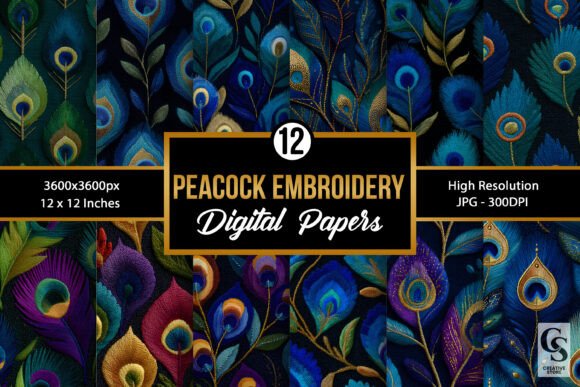
When I first opened the zip file containing the 12 Digital Papers, my immediate reaction was one of cautious optimism. Peacocks are iconic, often associated with luxury, elegance, and vibrant color. However, in the world of embroidery, intricate details can sometimes get lost in the density of the fill stitch. The Peacock Feather Embroidery Digital Paper presents a bold aesthetic. At 300dpi and a massive 3600 x 3600 pixels, the resolution is undeniably crisp. For an Etsy seller or a boutique owner creating printable mockup assets, this clarity is non-negotiable.
The visual personality of these designs leans heavily toward statement pieces. They are not subtle background patterns; they demand attention. The layout suggests a rich tapestry of blues, greens, and golds. In a craft business context, this kind of vibrancy can elevate a simple item into a premium offering. However, the sheer detail level means that if you plan to convert these directly into a digital embroidery file, you will need to be strategic about your digitization process. The complexity is beautiful, but it requires skill to execute without overwhelming the fabric.
Real-World Application: From Screen to Stitch
To truly test the utility of the Peacock Feather Embroidery Digital Paper, I imagined a specific project: a custom embroidered tote bag for a local artisan fair. Tote bags are a staple for small shop products, but they are also a testing ground for durability and visual impact. Using these high-resolution images as a reference for digitizing a feather motif, I could see exactly where the challenges would lie.
For custom apparel like sweatshirts or heavy canvas totes, the intricate "eye" of the peacock feather works beautifully. The large scale of the original image allows you to isolate specific sections of the feather to create a focal point. If you were to use this for sweatshirt embroidery, the dense stitch density required to capture the gradient colors of the feather would add a nice weight to the garment, making it feel substantial and expensive. Customers buying handmade product items often look for that tactile quality, and a well-executed peacock design delivers exactly that.
I also considered using these assets for baby embroidery projects, perhaps a nursery pillow cover or a blanket border. Here, the mood shifts. The peacock theme is whimsical and magical for a child's room. However, the thread colors must be carefully selected to ensure they aren't too harsh against soft cottons. The high resolution of the source file helps here, allowing you to pick out softer pastel variations from the original palette rather than relying on standard, neon-bright threads that might clash with delicate fabrics.
Navigating Technical Challenges and Limitations
While the Peacock Feather Embroidery Digital Paper offers stunning visuals, it is not a magic bullet for every situation. As a reviewer, I must point out where caution is necessary. The primary concern with such detailed graphics is the hoop size. A full feather design might require a large hoop, which limits the types of garments you can embroider. Trying to fit this level of detail onto a small cap or a curved surface is risky. The curves of a hat can distort the symmetry of the feather, ruining the illusion of depth created by the Graphics.
Fabric texture is another critical factor. On a smooth satin or tightly woven cotton, the running stitch and fill stitch will lay flat and crisp. However, on textured fabrics like linen or thick fleece, the fine details of the feather's barbs might get swallowed by the weave of the cloth. If you are planning to use this for holiday embroidery on a textured throw blanket, you may need to simplify the design significantly during the digitizing phase to maintain legibility.
Furthermore, dark fabrics present a unique challenge. Peacock feathers rely heavily on contrast and iridescence. Embroidering light blue and green threads on a black background requires significant underlay work to prevent the dark fabric from showing through. Without proper stabilizer usage and backing, the vibrant colors promised by the Peacock Feather Embroidery Digital Paper will appear dull and muddy. Always test the design on scrap fabric first to verify the color payoff before committing to a client order.
Strategic Use for Commercial Success
For the creative entrepreneur looking to expand their catalog, these digital papers serve a dual purpose. First, they act as inspiration for commercial embroidery projects. Second, they can be used as marketing assets. Because the files are high-resolution JPGs, they are perfect for creating professional finished product photos. You can overlay the digital paper onto mockups of aprons, tea towels, or embroidered patch designs to show potential customers what the final result could look like.
In terms of brand consistency, the peacock motif is versatile enough to fit various niches, from bohemian home decor to luxury fashion accessories. For an Etsy seller, having a cohesive line of products featuring this specific pattern can build strong buyer engagement. It signals a specific aesthetic that attracts a dedicated audience. Whether you are selling personalized gift items or bulk merchandise for a craft fair, the distinctiveness of the peacock feather helps your product stand out in a crowded marketplace.
Practical Designer Notes for Implementation
If you decide to integrate the Peacock Feather Embroidery Digital Paper into your workflow, keep these practical notes in mind:
- Test Before Production: Never skip the test run. Hoop a piece of scrap fabric similar to your final material and stitch a sample section to check stitch density and registration.
- Color Management: The digital image shows gradients that thread cannot perfectly replicate. Plan your thread colors carefully to mimic the effect using tonal shading rather than expecting a perfect photo match.
- Licensing Check: Before selling any finished product or using these images in a digital product preview, confirm the licensing terms. Ensure you have the right to use the Patterns commercially.
- Stabilizer is Key: Given the likely density of the stitches required to capture the feather details, use a cut-away stabilizer for stretchy fabrics and a tear-away for wovens to prevent puckering.
- Simplify for Small Items: If using this for a small tote bag design or a pocket square, crop the image to focus on the most recognizable part of the feather rather than trying to stitch the entire complex shape.
Ultimately, the Peacock Feather Embroidery Digital Paper is a powerful asset for those willing to put in the technical work. It offers the visual punch needed for high-end handmade presentation and brand recognition. While it requires careful consideration of fabric type, hoop size, and digitization techniques, the potential reward is a collection of stunning, professional-grade items that customers will love. For the discerning maker, this is more than just a download; it is a foundation for creating memorable, high-value embroidery projects.